Building a department around the player, from the Academy through to the first team.
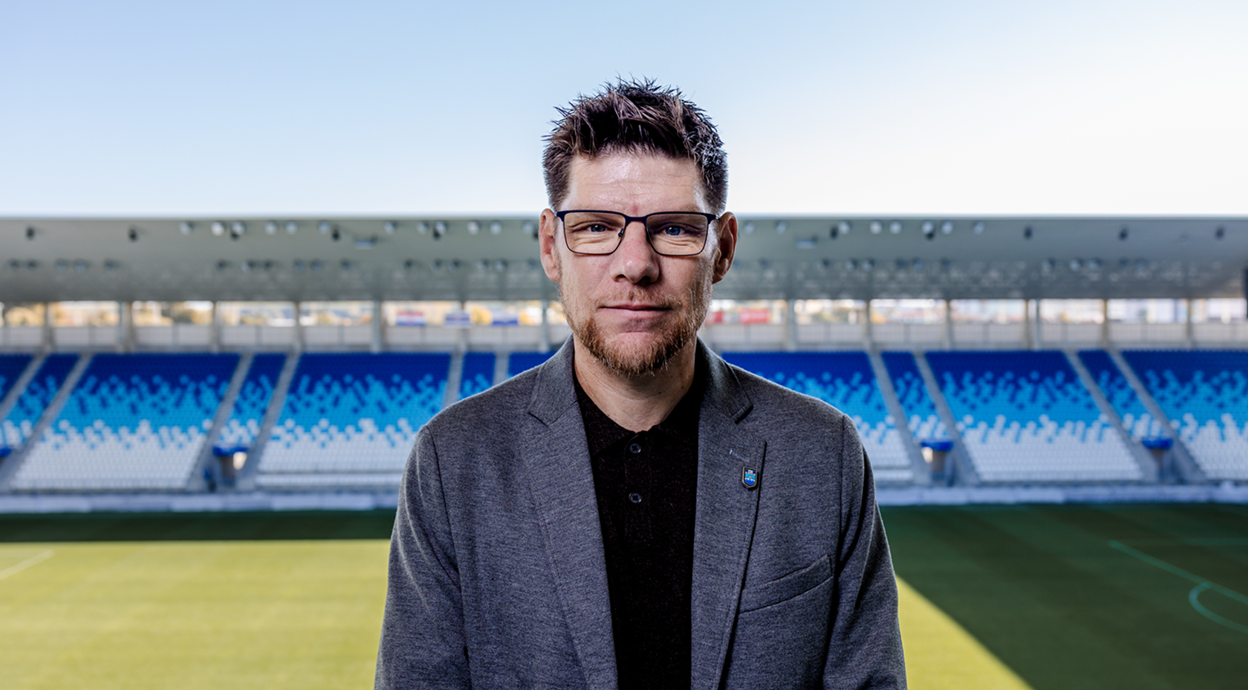
When a player signs a contract, the work is not finished. In many ways, that is when it begins. Keeping him healthy, ready to perform and able to reach his full potential is a job for many people: doctors, physiotherapists, sports scientists, strength and conditioning coaches, nutritionists, psychologists and analysts. The question is whether they work side by side, or as one team. At NK Osijek, the answer is now one team. The Club has created an entirely new Performance Department, bringing every area that looks after the player's body and mind under one leadership, for the first team and the Academy alike. Leading it as Performance Director is Paul White, who joins NK Osijek from Al Kholood Club in Saudi Arabia. The Performance Department is one of the three key areas of the project the Club began this year, alongside the technical football area and the Academy.
What is a Performance Department?
In many clubs, the people who care for players work in parallel. The doctor treats the injury, the fitness coach plans the session, the nutritionist plans the meals, and information passes between them when someone remembers to share it. A performance department changes that. Every specialist works within one structure, with one plan for each player, shared information and clear responsibility for decisions. For the player, that means one joined-up picture of his health and performance. For the coach, it means reliable information on who is ready, who is at risk and who needs a different load. For the Club, it means knowledge that stays in the organisation instead of in the heads of individuals.
The areas of the department
The Performance Department brings together: Medicine and sports therapy: the club doctors and physiotherapists, responsible for diagnosis, treatment and the daily care of every player. Sports science and data: measuring training and match load, testing physical qualities and turning data into decisions for coaches and staff. Strength and conditioning: physical preparation, injury prevention and age-appropriate physical development, from U12 to the first team.
Return to training and return to play: clear, evidence-based criteria for when an injured player is genuinely ready to train and compete again. Nutrition: the Club's nutritionist already works with every team, from the Academy to the first team. Psychology and mental performance: led by the Club's High-Performance Psychologist, supporting players with pressure, setbacks, injury and confidence. A Mental Performance Coach has joined the department to work one to one with first team and Academy players. Mental performance is also key to faster decision-making on the pitch, and in the future the mental department will play a key role in player selection. Analysis: connecting physical and medical information with what happens on the pitch. The Performance Director reports directly to the President and sits in the Club's senior leadership alongside CEO Olivier Jaubert and Academy Director Yago Aguilar Azón. The department also works very closely with First Team Head Coach Federico Bessone and his staff.
In simple terms, a performance department is a centralised, interdisciplinary team made up of smaller teams covering medical, rehabilitation, sports science, strength and conditioning, nutrition, psychology and analysis. The key is that they all work together to support players and coaches so that they can maximise their performance. For players, it means personalised support in every aspect of their development, not a one-size- fits-all approach. For coaches, it means objective insights and collaborative support, delivered in a time-efficient way, with a clear understanding that whatever support we provide must have a football impact at its heart, said White.
Asked what makes a performance department work, Paul points to his experience at Stoke City and Al Jazira:
Having helped build the academy pathway at Stoke City and a new department at Al Jazira, I would say a successful performance department relies on three pillars: alignment, communication and trust. It only works when every sub-discipline operates as one unified team rather than in isolated silos. That requires clear communication channels, a shared philosophy centred on the player’s best interests, and absolute trust from the coaching staff that performance insights directly support matchday success.
In practice, the day's football plan comes first, and every area works out how best to support it:
Day-to-day work will be driven by the football demands of the day. Once the football plan is clear, each sub-department works out how best to support it. For example, on a tactical conditioning day, load metrics from sports science inform nutrition strategies to fuel and recover the players. Strength and conditioning coaches prepare gym work that prepares the players for the load the players will face. Psychology helps players prepare mentally for a high cognitive and physical load, while supporting staff to use challenge language. The medical team update us on any modifications needed so that players remain fit and healthy. Everyone stays aligned through a centralised feedback loop after training.
The same joined-up approach applies when a player is injured:
Return-to-play decisions are never based on a timeline alone. We use an evidence-based, structured process that is documented and communicated clearly to everyone involved. It covers how the player is healing, their physical readiness compared with their pre-injury baseline, and their psychological confidence. We rely on objective criteria with a contextual understanding to achieve the medical clearance, which helps to reduce risk of re-injury. The whole department contributes evidence on whether a player is ready for full team training and match play, but the final sign-off comes from the medical department.
Who is Paul White?
Paul White has spent more than two decades in player development and performance. At Stoke City he spent thirteen years, from 2010 to 2023, as Head of Academy Sports Science and Athletic Development, as part of the Academy Management Team that built one of English football's strongest pathways for homegrown players into the first team. He then moved to the United Arab Emirates as Head of Academy Physical Performance at Al Jazira, where he built a performance department covering sports science, strength and conditioning, psychology, nutrition and medicine. Most recently, he has been Director of Performance at Al Kholood Club in Saudi Arabia, with oversight of analysis, performance and medicine across the club. Earlier in his career he worked in the academies of Portsmouth and AFC Bournemouth. Paul holds an MSc in Enhancing and Maintaining Sports Performance and a postgraduate diploma in Strength and Conditioning, and completed a Masters in Sporting Directorship in 2023. He is an NSCA Certified Performance and Sport Scientist, a BASES accredited and chartered scientist, a UKSCA accredited strength and conditioning coach and a UEFA/AFC B Licence holder. He has published research on the physical demands of youth football and on biological maturation in academy players, including bio-banding, a subject at the heart of developing young players fairly.
What stood out was the people. Everyone I spoke to during the process was enthusiastic, hard- working and clear about where the Club wants to go, and that matters a great deal to me. The investment in world-class infrastructure, highlighted by the Opus Arena, shows a real commitment to growth. What ultimately convinced me was the leadership’s openness to innovation and the desire to build one unified high-performance environment, supporting both elite development and sustainable success.
His first days at the Club have confirmed that impression:
The warm welcome from everyone has been amazing, the facilities are of the highest quality, but what has impressed me the most is I see is a positive environment and a great place to work. It is important to have an environment that helps cultivate a high-performance culture, and the people, the facilities and the ambition here all point in that direction.
One department, from the Academy to the first team
The Performance Department covers the whole Club. Performance and medical staff working in the Academy report to the Performance Director, so that a fifteen-year-old and a first team player are looked after by the same standards, the same methods and the same information. Much of the groundwork is already in place. The department works on Teamworks, using its athlete management system (AMS) and nutrition tools, so that every player's medical, physical and nutrition information sits in one place. Catapult tracking is used in every Academy category up to U15, every selected Academy player wears a Whoop device, and the aim is to extend it to every player from U15 upwards. Every Academy player receives free dental care, and the physical and mental performance work now reaches every age group.
Data from Catapult and Whoop gives us an objective lens to monitor internal and external load, manage fatigue and, where necessary, individualise training. But data has limits. The numbers tell us what is happening physiologically; they do not always explain why or capture the context of football’s unique environment. Technology should inform, not dictate, decisions. It should enhance, not replace, coaching intuition, expert observation and open conversations with the players themselves.
Francesc Cos shares the same view:
Data and technology are merely supporting elements within a dynamic and complex ecosystem. Data helps professionals make better, evidence-based decisions; however, it is essential to focus on what is truly relevant, as an excess of information can actually hinder processes. Ultimately, professional judgment is what prevails. Management in complex environments requires decision-making based on a holistic view of that complexity and the dynamic interaction of all the systems involved.
Paul's own research focuses on one of the most important questions in youth football: the difference between how old a player is and how physically mature he is:
Chronological age is simply how old a player is. Biological maturation is how far along they are towards physical adulthood, and during adolescence the two can be years apart. Early maturers can get by on size and strength, while late maturers with excellent technical ability risk being overlooked. Bio-banding groups players by maturity rather than age for selected training and games. Late maturers get more opportunity to show their skills, and early maturers have to rely on technical and tactical qualities instead of physical advantage. It also gives coaches a fuller picture of each player and helps us avoid losing hidden gems.
Connecting the Academy and the first team is equally central:
Alignment between the first team and the Academy is essential, otherwise you effectively have two different clubs within one club. A documented performance plan explaining the “NK Osijek Way” gives Academy prospects a more structured transition when they step up to train or play with the senior team. It explains what, where, when and how we work across the sub- departments, and, more importantly, why. In practice, that means a common language, working practices, consistent monitoring and data that follows players up through the age groups. The why connects everyone to the Club’s wider vision and goals, and back to the most important thing: Football.
Francesc Cos: learning from the best
The department is being built with the support of Francesc Cos, one of the most respected names in football performance. Francesc spent twelve seasons on FC Barcelona's first team staff as Head of Strength and Conditioning and Return to Play, working under coaches including Frank Rijkaard and Pep Guardiola on teams that won 42 titles. He later served as Director of Performance and Health at New York City FC and in sports science at Manchester City, and today works as a Global Performance Specialist for City Football Group, supporting more than thirteen clubs worldwide. He holds a PhD, has taught at the University of Barcelona for 25 years, and holds a patent in hamstring injury prevention. Francesc has already spent time in Osijek, observing how the Club works and analysing medicine, physiotherapy, injury prevention, rehabilitation, return to play, recovery, nutrition, testing, sports science and data. The aim is not to copy another club, but to give NK Osijek's own specialists access to new knowledge, methods and best practice. Paul and Francesc already know each other, and Paul is clear about how he wants to work with him and with the Club's existing staff:
Collaboration and mutual respect are the foundation of how I work. I try to understand the person, not just their role, whether that is Francesc, whom I already know, or existing staff I have yet to meet. Everyone brings valuable experience and local expertise. My goal is to listen, find out what is going well and what challenges people face, then support and empower them, combine our knowledge and build an integrated framework where everyone’s strengths are used to raise the Club’s overall performance standards, said White
Francesc's first impressions of the Club were clear:
First, I must say that I liked the city, it is quiet and welcoming, and then, the visit to the club truly surprised me. It is not often that you see clubs with the kind of infrastructure that NK Osijek possesses. A major investment has been made… and with excellent judgment. But, without a doubt, what excited me the most was meeting the staff: they are excellent professionals, passionate about their work, and generous in their dedication; I felt very warmly welcomed.
Asked why a club like NK Osijek needs a performance department, he explains:
Preparation in high performance sport is extremely complex and demanding. High performance systems are made of separate but interconnected areas; each area includes different profiles that are interrelated and which support players and coaching staff. In recent years these organizational structures have grown and gained in complexity and it is essential to coordinate all the professionals to make the most of them for the benefit of the group.
He also knows the new Performance Director well:
I know Paul White very well. Paul is a tireless, honest, and humble worker with extensive experience in this role. He knows in depth the needs and characteristics of each department in order to help them. I am convinced that he will enjoy this new professional chapter and make a decisive contribution to the growth of this project. We will work together on this exciting project!
Like Albert Puig in the Academy, Francesc is clear that the aim is not to bring another club's model to Osijek:
Indeed, it is not a matter of copying. It is about the drive to pursue excellence: improving procedures, fostering the continuous growth of our professionals, and remaining at the forefront of innovation without compromising evidence-based practice. This also entails the personalization of all treatments, prescriptions, and approaches for each individual player.
The Club's people are at the centre of this change. The goal is for NK Osijek's doctors, physiotherapists and performance coaches to grow alongside the new structure, so that the knowledge brought in from outside becomes the Club's own. As the President put it: When our people become better, the Club becomes better. For Francesc, developing the Club's own specialists is a key aspect of the project:
This is a key aspect. The club’s own professionals are the best-suited to lead NK Osijek. Their understanding of the club’s unique character, along with their deep sense of belonging and pride, are assets of incalculable value to the institution. Another significant factor is the leadership that each of them will bring to the group. Contrary to what one might assume, leadership within the team is not vested in a single individual; rather, it is fluid, with various team members stepping up as the situation demands. There is no one better equipped than the professionals at Osijek to lead the club they hold so dear.
And success, in his eyes, will be measured in people:
Seeing people who are committed to and proud of the club, its history, and its culture: professionals with a desire to keep learning and growing. I look forward to seeing people who find joy in their day-to-day work, and I am firmly convinced that, together, we will celebrate collective successes!
Paul's own measure of success is set out just as clearly:
In two years, I would want to see a club-wide, process-driven performance plan that gives clarity and accountability to everyone involved. Ultimately, success looks like a fully embedded, autonomous performance culture, where data informs how we work and the people in this department are trusted, everyday drivers of competitive success. We will agree the specific targets with senior management, but I would expect them to cover matchday availability, re-injury rates, and consistent benchmarking of players from the Academy through to the first team.