

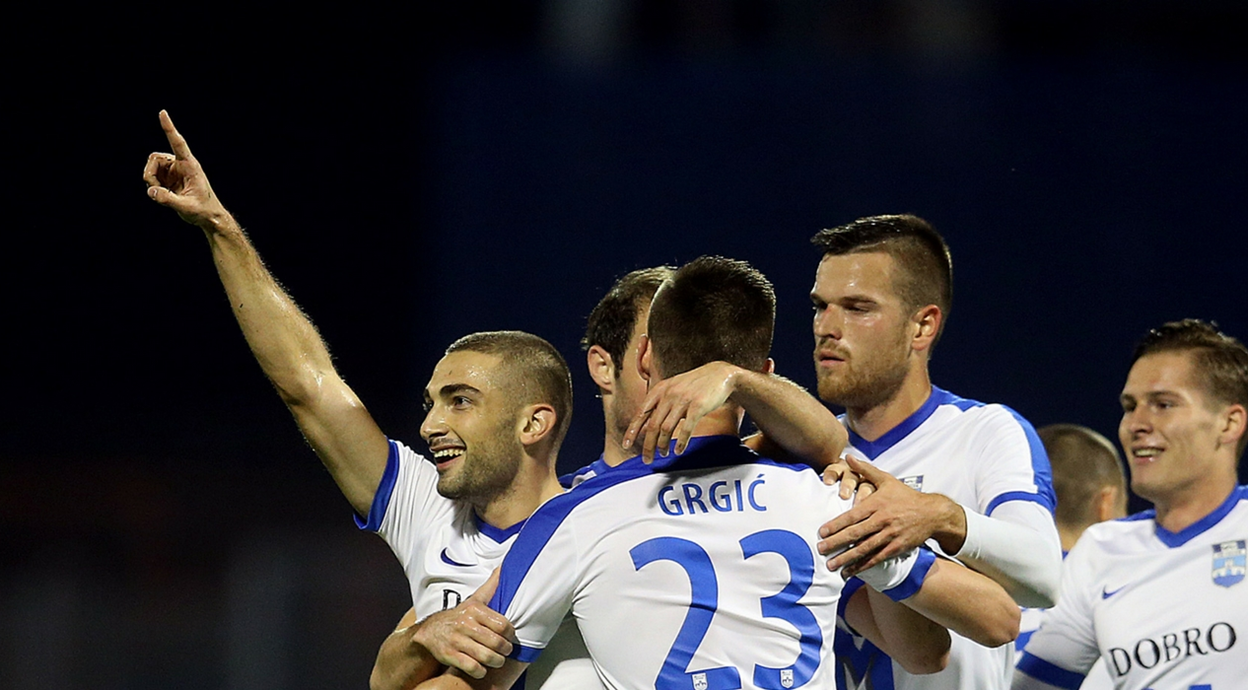
NK Osijek was completely run independently for a long time, in total uncertainty, pressured by debt, but now it is stable and successful.
One more year is nearing its end, in which NK Osijek achieved many a delight and revelry for its fans. Impressive are the events that transpired in the club and around it, 2 years ago, towards late 2015. Then, begin autumn, NK Osijek was to be transformed, and there were many yet unanswered questions.
A solution was to be found because a limit had been reached. At first, Croatia’s first brewery expressed interest for buying Osijek, but the fans, specifically Kohorta, weren’t having it. They decided to boycott game attendance, which didn’t leave the brewery’s owner, Ivan Komak, unconcerned. Following these events, it wasn’t a surprise that Komak gave up the prospect of buying the majority of NK Osijek’s shares, so that attempt ended badly.
The Germans were merely a media story
The situation was getting ever more complicated and uncertain, and the city participated greatly in searching for a solution, fueled by mayor Vrkic’s initiative. In Autumn of the same year, there were talks of German investors coming to the rescue, more precisely the HFK group, who wanted to own the majority of NK Osijek. The Germans announced that they will buy 29% of the shares, announcing initially their intent through football manager Mirad Keric, who had had a strange and unelucidated role in NK Osijek up until then, saying that the Germans even wanted 75% of the shares.
It was strange to most that nothing concrete was being done, even though the creditors at Gradska Banka d.d. accepted the terms in the bankruptcy that they would sell their stock packages. It quickly showed that the Germans weren’t a deal because they had never presented their intentions publicly and their payment deadline was long overdue. Without any explanation, HFK gave up on the idea to own NK Osijek. It showed, then, that the Germans were merely a rumor.
There was no time for waiting
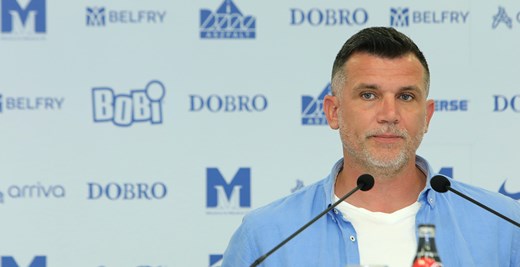
Time was running out and mayor Vrkic didn’t have any, since bankruptcy was looming. Therefore, a suggestion was pitched to the city officials to sell the club shares, owned by the city and the company Vodovod, for one symbolic kuna (roughly 0.15 Euro), the involved parties being aware of the dire situation in which the club was. As a condition for the future owner of NK Osijek, he/she was obligated to settle the pre-bankruptcy settlement to the bank, whose patience was all but gone. Luckily, in that chaotic time, when the fans were worried for NK Osijek’s fate, Ivan Mestrovic entered the fray, who was always focused on doing business outside of the country. Of crucial value was his participation in the executive committee’s work of some then-club boards, but it was primarily his will, drive and determination to help save the city’s club, in a time where barely anyone could see the light at the end of the tunnel.
Mestrovic’s rescue mission
Mestrovic presented the project to his business partner and friend, the Hungarian Lorinc Meszaros, who was greatly interested and finally persuaded to jointly consolidate and elevate NK Osijek out of the gutter. A letter of intent was shortly penned to the city and its inhabitants and during a city council session in January 2016, it was unequivocally accepted that these 2 businessmen will buy Osijek’s shares, as the only ones interested. With the public signing of the Contract of Ownership Transfer, with Osijek being almost bankrupt, Meszaros and Mestrovic assumed ownership over most of NK Osijek, on the 12th of February. 2016.
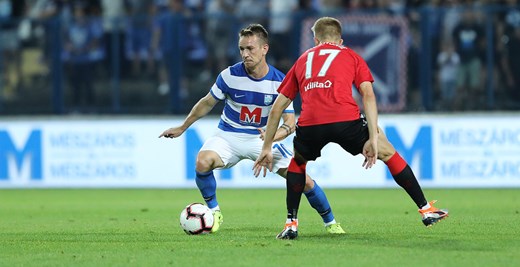
Settling debts was the first thing to do, along with arbitration disputes and all other things that encumbered the normal functioning of the club, which gained a new mode of work quite quickly, namely an incredibly needed organizational and logistical stability with huge strides forward. From nigh-bankruptcy to functionality in quite a short time span was the name of the game. NK Osijek became exemplary in its way of operating, even attracting outside sponsors, coinciding with the “Get the City Moving” initiative which breathed new life into Osijek, putting it on Europe’s football map once again.